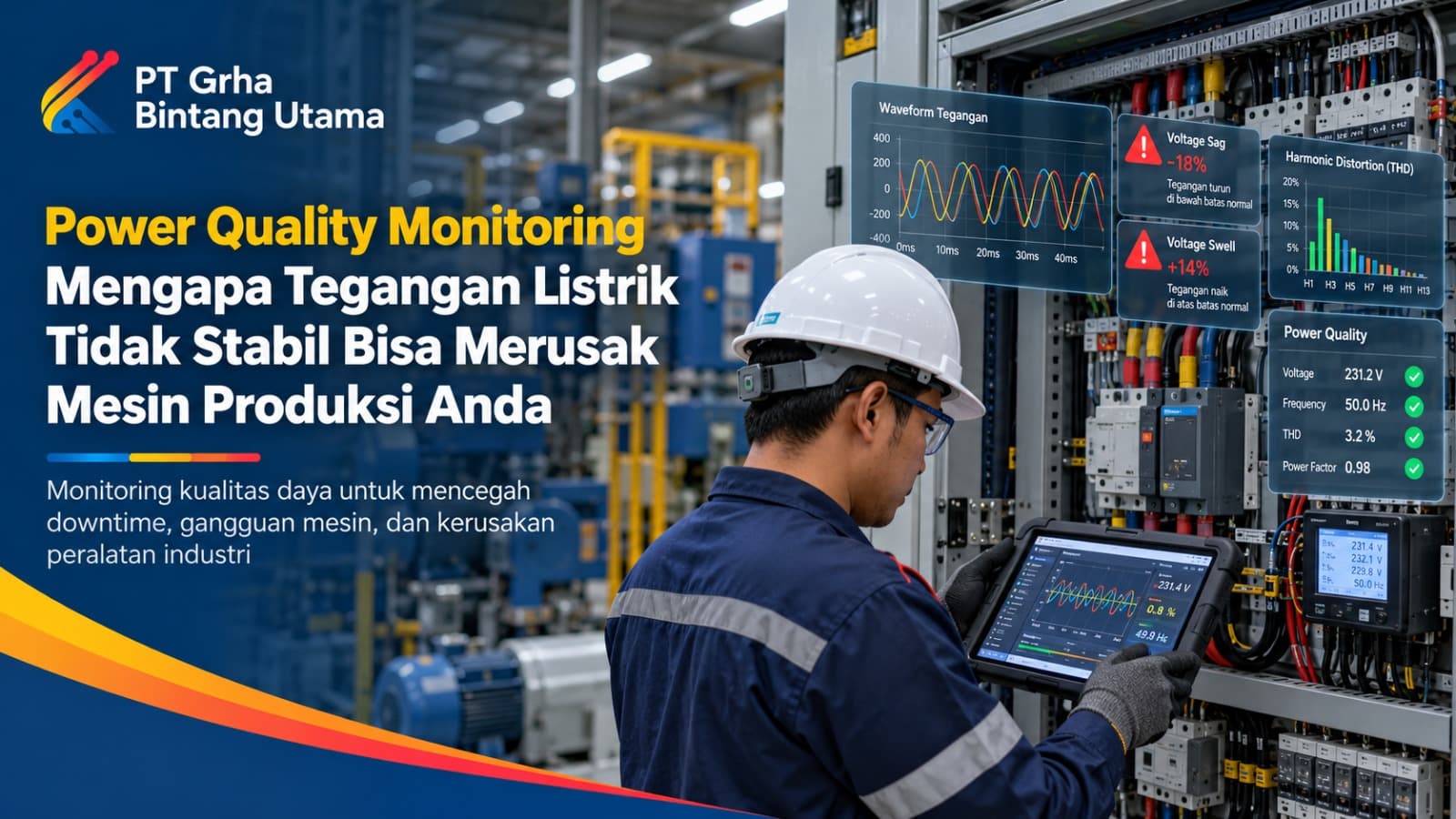
Power Quality Monitoring: Why Unstable Voltage Can Damage Your Industrial Production Equipment
Author
Power Quality Monitoring: Why Unstable Voltage Can Damage Your Industrial Production Equipment
Stable electrical power is essential for modern manufacturing operations. CNC machines, conveyors, motors, PLCs, Variable Frequency Drives, industrial robots, compressors, and automated production systems all depend on reliable electrical energy.
However, having electricity available does not necessarily mean that the electricity is of good quality.
Voltage sags, voltage swells, harmonics, transients, imbalance, and frequency variations can occur within an electrical network and may remain unnoticed until equipment starts malfunctioning.
This is why power quality monitoring has become increasingly important for industrial facilities.
Schneider Electric explains that voltage deviations may cause equipment malfunction, data loss, and production downtime. Power quality monitoring can capture voltage fluctuations, frequency variations, harmonic distortion, sags, swells, and transient events. Schneider Electric
What Is Power Quality Monitoring?
Power quality monitoring is the continuous or periodic measurement of electrical characteristics to determine whether power supplied to equipment remains within acceptable conditions.
A monitoring system can detect events including:
- voltage sags;
- voltage swells;
- harmonics;
- transients;
- voltage imbalance;
- frequency variation;
- power-factor problems;
- short interruptions.
IEEE describes power quality monitoring as the observation of deviations from nominal voltage and frequency conditions, including sags, swells, harmonics, flicker, and transient overvoltages. IEEE Technology Navigator
This information allows maintenance and engineering teams to determine whether disturbances originate from the utility grid or from equipment operating within the facility.
Why Is Unstable Voltage Dangerous?
Modern manufacturing machines contain highly sensitive electronic components.
PLCs, VFDs, servo drives, controllers, relays, sensors, and industrial computers are designed to operate within specific voltage limits.
Even relatively short electrical disturbances can therefore interrupt a manufacturing process.
Fluke explains that voltage sags and swells can reset sensitive machinery, interrupt production lines, and potentially damage critical components. Harmonic distortion may also contribute to transformer overheating, unwanted circuit-breaker trips, and premature aging of electrical equipment. Fluke
Voltage Sags
A voltage sag is a temporary reduction in voltage.
It may occur due to:
- large motor starting;
- faults in the electrical network;
- short circuits;
- sudden increases in electrical load;
- utility disturbances.
Voltage sags are especially problematic in automated production environments.
Fluke notes that sags may cause improper operation of electronic equipment, motor trips, and relay dropouts. Fluke
The U.S. Department of Energy has also documented that voltage sags can de-energize protective devices and create problems with process-control equipment. Energy Efficiency and Renewable Energy
Voltage Swells
A voltage swell occurs when voltage temporarily rises above the normal operating level.
Repeated exposure to excessive voltage can increase stress on electrical insulation and sensitive components.
Fluke notes that swells can eventually damage insulation and contribute to failure of electronic components. Fluke
Harmonic Distortion
Another major power-quality issue in modern facilities is harmonic distortion.
Harmonics are commonly associated with non-linear electrical loads such as:
- Variable Frequency Drives;
- UPS systems;
- switching power supplies;
- LED drivers;
- inverters;
- industrial electronics.
These devices can distort the normal sinusoidal waveform of an electrical system.
Excessive harmonics may increase heating in cables, transformers, motors, and other electrical equipment.
Fluke reports that harmonic distortion can contribute to transformer overheating, circuit-breaker tripping, reduced performance of sensitive electronics, and shortened equipment life. Fluke
Transients and Voltage Spikes
Transients are extremely short-duration voltage disturbances.
Potential sources include:
- lightning;
- large-load switching;
- capacitor-bank switching;
- faults within the electrical network.
Although they may last only fractions of a second, high-energy transients may affect sensitive controllers, PLCs, communication equipment, and power supplies.
Voltage Imbalance
Three-phase electrical systems should ideally maintain similar voltage levels across all phases.
When one or more phases operate at significantly different voltage levels, motors may experience abnormal operating conditions.
ABB highlights voltage imbalance and voltage variation as important industrial power-quality problems. Low or unbalanced voltage may also create motor overheating concerns. ABB Library
How Poor Power Quality Affects Production Equipment
Poor power quality can create many operational problems, including:
- Unexpected VFD trips.
- PLC resets.
- Motor overheating.
- Relay or contactor dropout.
- Unstable sensor readings.
- Machine shutdowns.
- Product scrap.
- Production restart requirements.
- Premature electronic-component failure.
- Increased downtime.
Rockwell Automation states that voltage sags and momentary outages account for a significant amount of manufacturing downtime, scrap material, and damaged equipment. Rockwell Automation
For manufacturers, the cost therefore extends beyond repairing the electrical equipment itself.
An unexpected shutdown may stop an entire production line, delay delivery schedules, waste raw material, and increase maintenance costs.
How Does Power Quality Monitoring Work?
A power quality monitoring system typically uses advanced electrical meters or power quality analyzers installed at strategic points within the electrical distribution network.
The system can measure parameters such as:
- voltage;
- current;
- frequency;
- power factor;
- Total Harmonic Distortion;
- voltage sag;
- voltage swell;
- transient events;
- energy consumption.
Information can then be transmitted to a monitoring dashboard.
Modern systems may also integrate with:
- SCADA;
- Building Management Systems;
- Energy Management Systems;
- Industrial IoT platforms;
- cloud dashboards;
- command centers.
Eaton explains that advanced power-quality meters can monitor cycle-by-cycle voltage regulation, capture sags and swells, monitor harmonics and transients, and trigger alarms when conditions exceed predefined limits. Eaton
From Reactive to Predictive Maintenance
Without monitoring, many electrical problems are discovered only after a machine trips or fails.
That represents a reactive maintenance approach.
With historical power-quality data, maintenance teams can correlate electrical disturbances with production problems.
For example, a VFD may repeatedly trip when a large motor starts elsewhere in the facility.
A power quality monitoring system may reveal that the motor starting event causes a voltage sag.
Instead of replacing components unnecessarily, the engineering team can investigate the actual root cause.
This supports a transition toward predictive and condition-based maintenance.
Benefits of Power Quality Monitoring
Industrial facilities can gain several benefits from power quality monitoring:
- faster detection of electrical disturbances;
- reduced unexpected downtime;
- improved troubleshooting;
- greater equipment reliability;
- historical power-quality records;
- support for predictive maintenance;
- improved visibility into electrical systems;
- better identification of disturbance sources.
ABB notes that power quality is business-critical because modern industrial equipment is becoming increasingly sensitive to network disturbances, while harmonics, imbalance, and poor power factor can contribute to increased operating costs and accelerated aging of electrical infrastructure. ABB Group
Conclusion
A production facility may appear to have a normal electricity supply while still experiencing hidden power-quality problems.
Voltage sags, swells, harmonics, transient events, voltage imbalance, and frequency disturbances can occur very quickly and may be difficult to detect without proper monitoring equipment.
For industrial facilities using PLCs, VFDs, motors, robots, and automated machinery, these disturbances can lead to equipment trips, overheating, unexpected downtime, and premature component failure.
Implementing power quality monitoring provides the visibility required to identify these conditions earlier.
With real-time monitoring and historical data, companies can investigate electrical events more effectively, improve maintenance decisions, and reduce the risk of costly production interruptions.
PT Grha Bintang Utama can support industrial electrical and power-quality monitoring requirements to help improve system visibility, equipment reliability, and operational continuity.
5 WEBSITE REFERENCES
- Schneider Electric — Power Quality Management Schneider Electric
- Fluke — Power Quality Audits and Monitoring Fluke
- ABB — Power Quality Solutions ABB Group
- Eaton — Advanced Power Quality Meters Eaton
- Rockwell Automation — Voltage Sag Protection Rockwell Automation
Source :
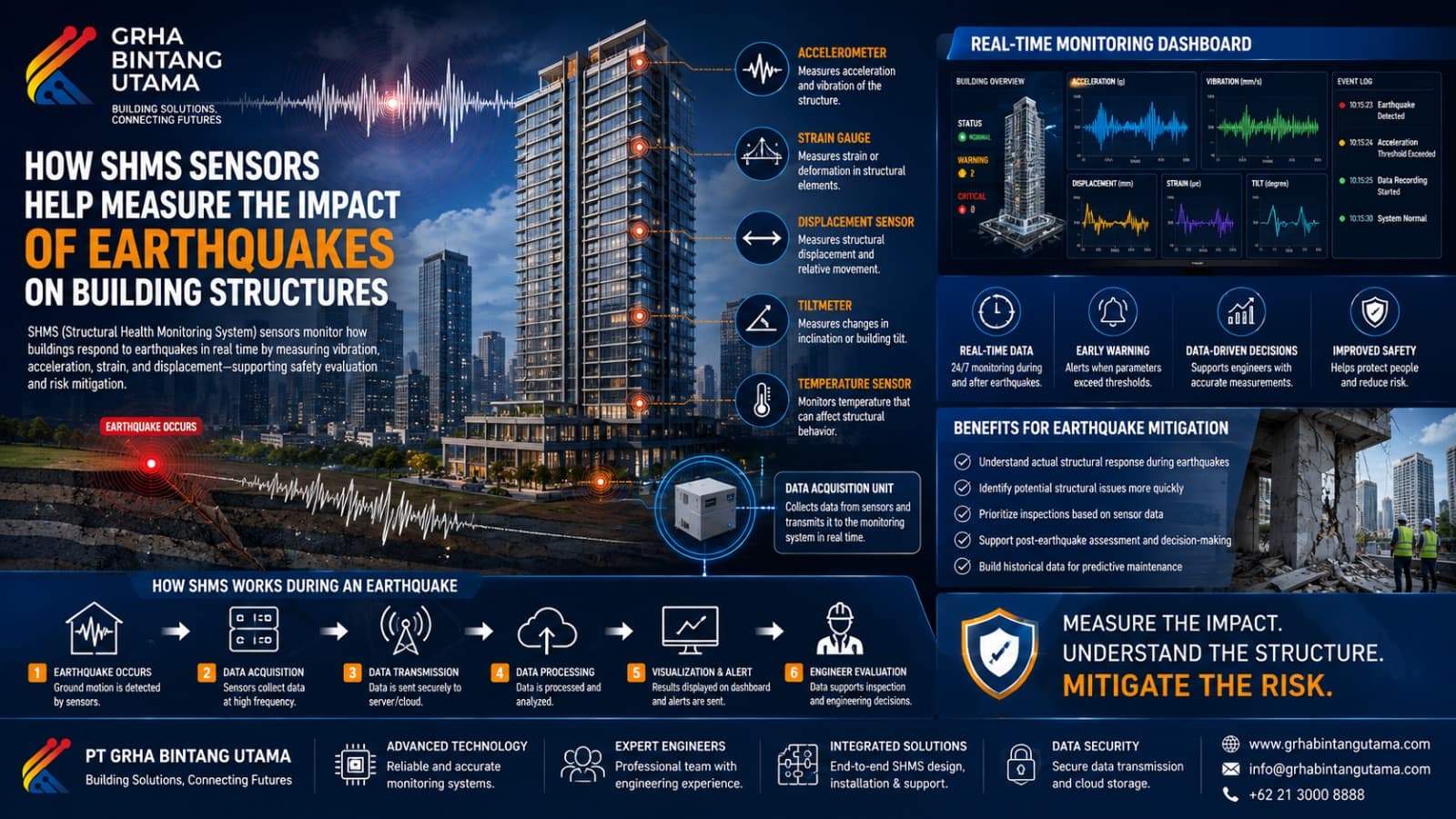
https://grhabintangutama.co.id/How SHMS Sensors Help Measure the Impact of Earthquakes on Building Structures
Read More
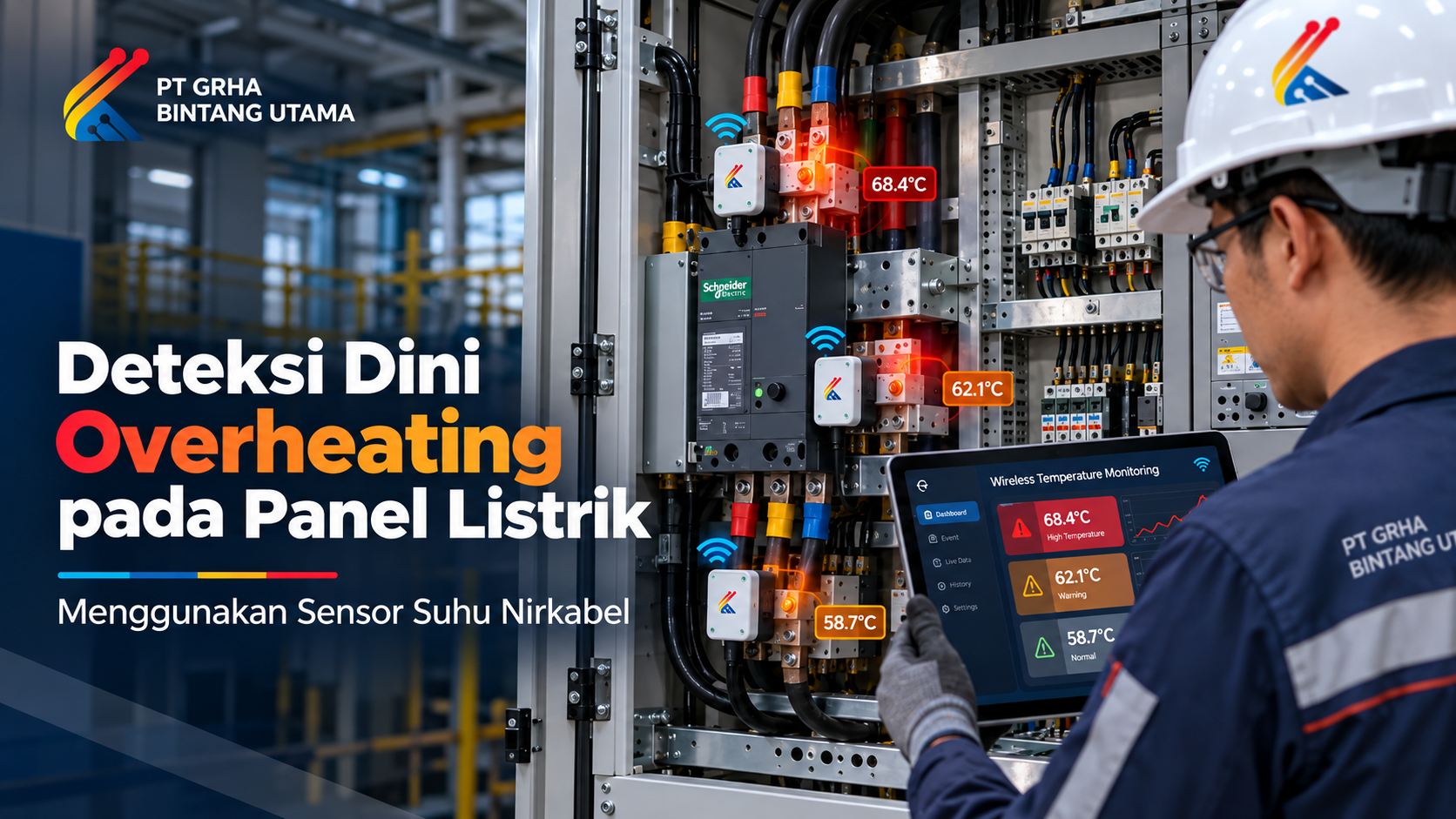
Early Detection of Electrical Panel Overheating Using Wireless Temperature Sensors for Plant Safety.
Read More
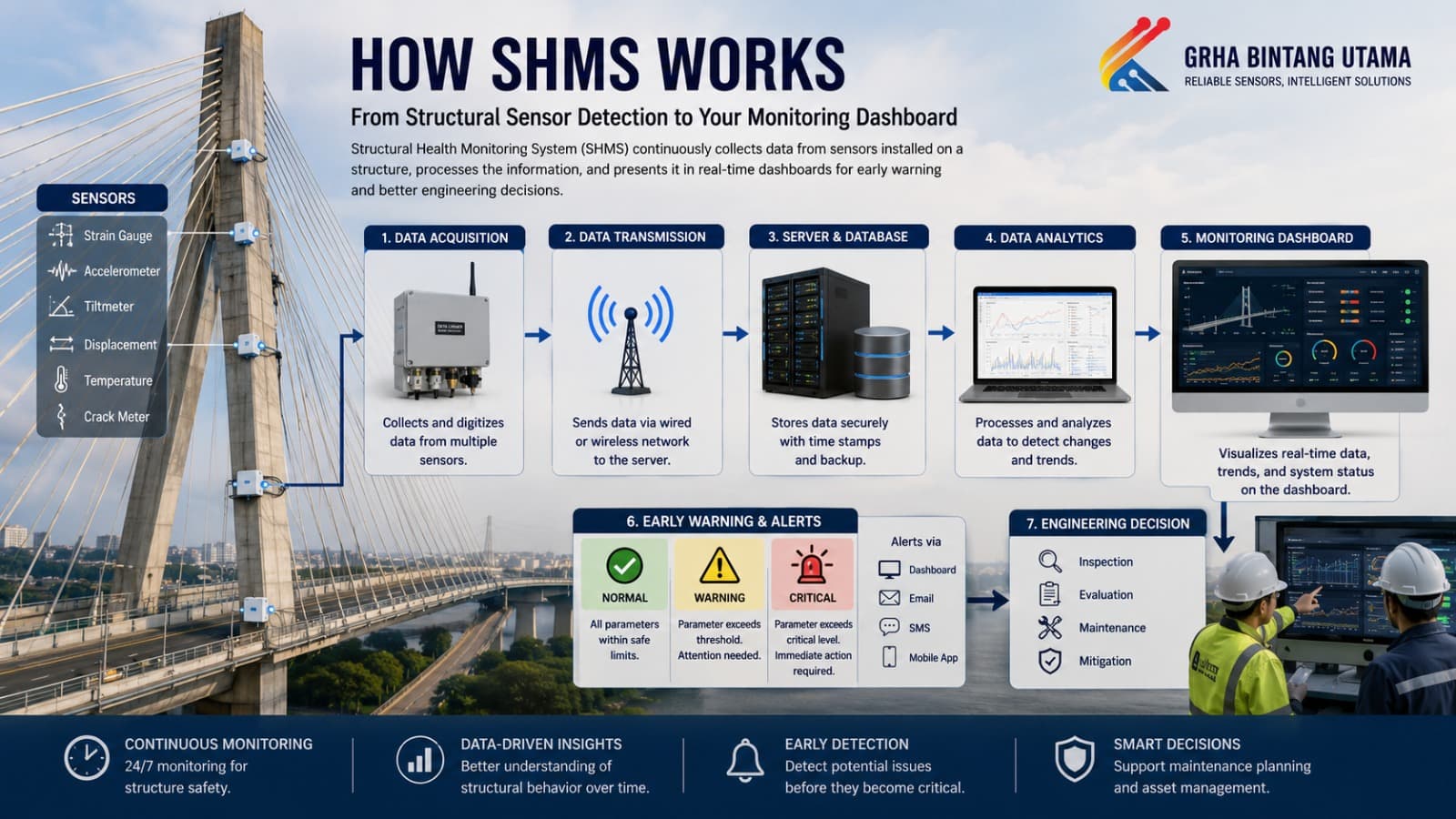
Infographic: How SHMS Works from Structural Sensor Detection to a Real-Time Monitoring Dashboard
Read More

Jakarta Selatan, [email protected] 0812-1146-0008