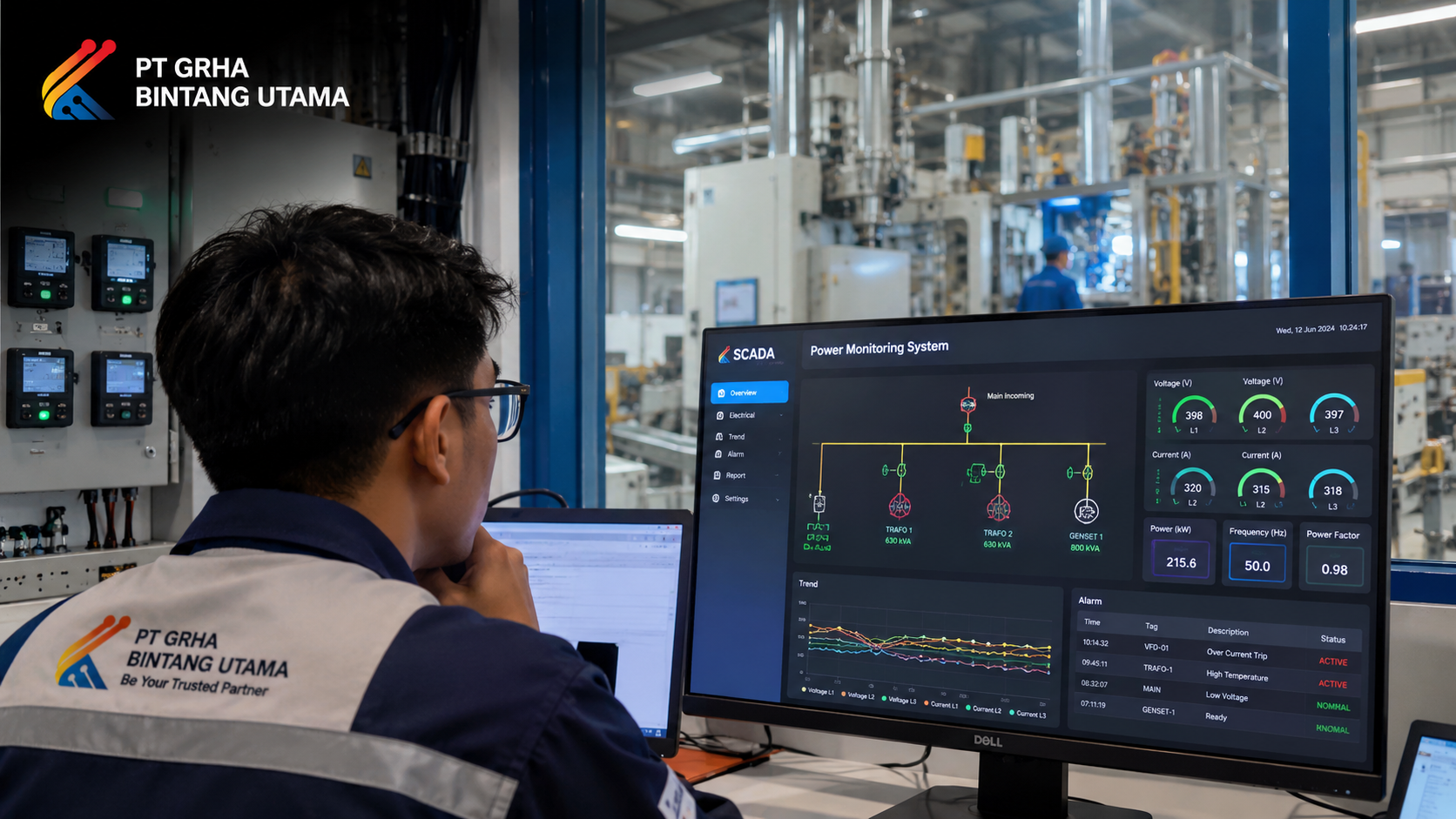
Electrical Sensor Integration with SCADA Systems: Building Smarter, Connected Industrial Factory Now
Author
Electrical Sensor Integration with SCADA Systems: Moving Toward the Smart Factory Era
Industrial digital transformation is rapidly changing how factories monitor, control, and maintain production assets.
One important foundation of this transformation is electrical sensor integration with SCADA.
Electrical sensors and meters can measure parameters such as voltage, current, active power, reactive power, energy, frequency, power factor, and other equipment conditions.
However, their value increases significantly when the information is connected to a Supervisory Control and Data Acquisition system.
SCADA provides a centralized environment where information from sensors, PLCs, RTUs, industrial gateways, and other field devices can be monitored and visualized.
Schneider Electric describes SCADA as a combination of software and hardware that allows industrial organizations to monitor and process real-time data, interact with field devices, control processes, and maintain event records. Schneider Electric Blog
Why Integrate Electrical Sensors with SCADA?
In a conventional facility, technicians may need to physically inspect electrical meters or panels to determine operating conditions.
This provides only a snapshot at the time of inspection.
With electrical sensor integration with SCADA, measurements can be continuously transmitted to a central monitoring system.
Operators can therefore observe electrical conditions across multiple machines, motors, panels, and production areas.
Siemens describes modern SCADA architecture as a way to integrate heterogeneous shop-floor data into scalable systems. Industrial Edge supports secure data acquisition while SCADA provides visualization, alarms, event management, and operational visibility. Siemens
This becomes particularly valuable in large production facilities where hundreds of electrical assets may need to be monitored.
What Electrical Data Can Be Monitored?
Modern electrical sensors can measure a wide range of parameters.
Typical examples include voltage, current, energy consumption, active power, reactive power, frequency, power factor, phase imbalance, and harmonic distortion.
The information can be transmitted through PLCs, RTUs, gateways, or industrial communication networks before reaching the SCADA platform.
If a parameter exceeds a predefined threshold, SCADA can automatically generate an alarm.
For example, if motor current begins to rise continuously, operators may receive an early warning before the condition leads to overheating or a protection trip.
How Does the Integration Work?
The process generally begins at the field level.
Electrical sensors or meters collect actual operating data.
This information is passed to a PLC, RTU, industrial gateway, or edge device.
Communication may use technologies such as Modbus RTU, Modbus TCP, EtherNet/IP, MQTT, or OPC UA.
OPC Foundation explains that OPC UA is applicable across industrial sensors, actuators, control systems, Manufacturing Execution Systems, Enterprise Resource Planning systems, IIoT applications, and cloud-connected environments. OPC UA Online Reference
SCADA then converts this information into dashboards, trends, alarms, historical records, and operator interfaces.
The Role of OPC UA
Interoperability is a major challenge in industrial environments.
A factory may use PLCs from one vendor, meters from another, sensors from multiple suppliers, and a separate SCADA platform.
OPC UA provides a standardized method for information exchange across different vendors.
The OPC Foundation describes OPC as an interoperability standard designed for secure and reliable industrial data exchange while remaining platform independent. OPC Foundation
OPC UA also supports authentication, encryption, auditing, information modeling, and scalable communication. OPC Foundation
For smart factories, this makes it easier to connect new and legacy equipment into a common monitoring architecture.
Supporting Predictive Maintenance
Another major benefit of sensor and SCADA integration is historical data.
Suppose an industrial motor normally operates at approximately 45 A.
SCADA history may reveal that current gradually increases from 45 A to 49 A, then 53 A, and finally 58 A over several weeks.
The machine may still be operating, but the trend suggests that further investigation is needed.
Possible causes could include increased mechanical load, bearing deterioration, motor issues, voltage imbalance, or other abnormalities.
Instead of waiting for an unexpected shutdown, maintenance personnel can investigate the condition earlier.
This supports a transition from preventive maintenance toward predictive and condition-based maintenance.
SCADA, IIoT and the Smart Factory
Modern SCADA does not need to operate as an isolated system.
It can be connected with Industrial Internet of Things platforms, edge computing, MES, analytics tools, enterprise applications, and cloud services.
Schneider Electric describes IoT and SCADA as complementary technologies for Industry 4.0. Industrial facilities typically contain different PLCs, RTUs, machines, legacy assets, and SCADA systems, making data integration an important part of digital manufacturing. Schneider Electric Blog
Rockwell Automation similarly describes IIoT platforms as systems capable of connecting different sensors, devices, applications, and industrial data sources while enabling real-time access to operational information. Rockwell Automation
This allows electrical information to become part of a much broader digital factory ecosystem.
Benefits of Electrical Sensor and SCADA Integration
The integration can provide several operational advantages:
- Real-time electrical monitoring.
- Faster detection of abnormal conditions.
- Automated alarms.
- Historical trend analysis.
- Faster troubleshooting.
- Predictive-maintenance support.
- Reduced manual inspections.
- Improved equipment reliability.
- Energy-performance visibility.
- A foundation for smart manufacturing.
Schneider Electric's smart-factory implementation also highlights the use of IIoT connectivity, edge analytics, remote monitoring, and predictive maintenance to improve operational efficiency and data-driven decision-making. Schneider Electric
Cybersecurity Is Essential
Increased connectivity also creates additional cybersecurity requirements.
Industrial organizations should consider network segmentation, authentication, encryption, access control, backups, firewall policies, and patch-management procedures.
Modern SCADA modernization also increasingly involves IT/OT convergence, which AVEVA notes can create new operational and cybersecurity challenges when IT policies are applied to OT environments without appropriate operational controls. Aveva
Security must therefore be considered as part of the system architecture rather than added only after deployment.
Conclusion
Electrical sensor integration with SCADA is an important foundation for the transition toward smart factories.
Sensors provide real-time measurements, while SCADA converts those measurements into dashboards, historical trends, alarms, and actionable operational information.
When combined with PLCs, RTUs, industrial gateways, OPC UA, IIoT platforms, and edge computing, the system can provide greater visibility into electrical infrastructure and production assets.
This enables faster troubleshooting, more proactive maintenance, better energy awareness, and stronger data-driven decision-making.
For manufacturing organizations pursuing Industry 4.0, integrating electrical sensors with SCADA can provide a scalable foundation for a factory that is more connected, reliable, responsive, and efficient.
PT Grha Bintang Utama can support industrial monitoring, electrical sensing, data integration, and smart-factory solutions tailored to the operational requirements of each facility.
Source :
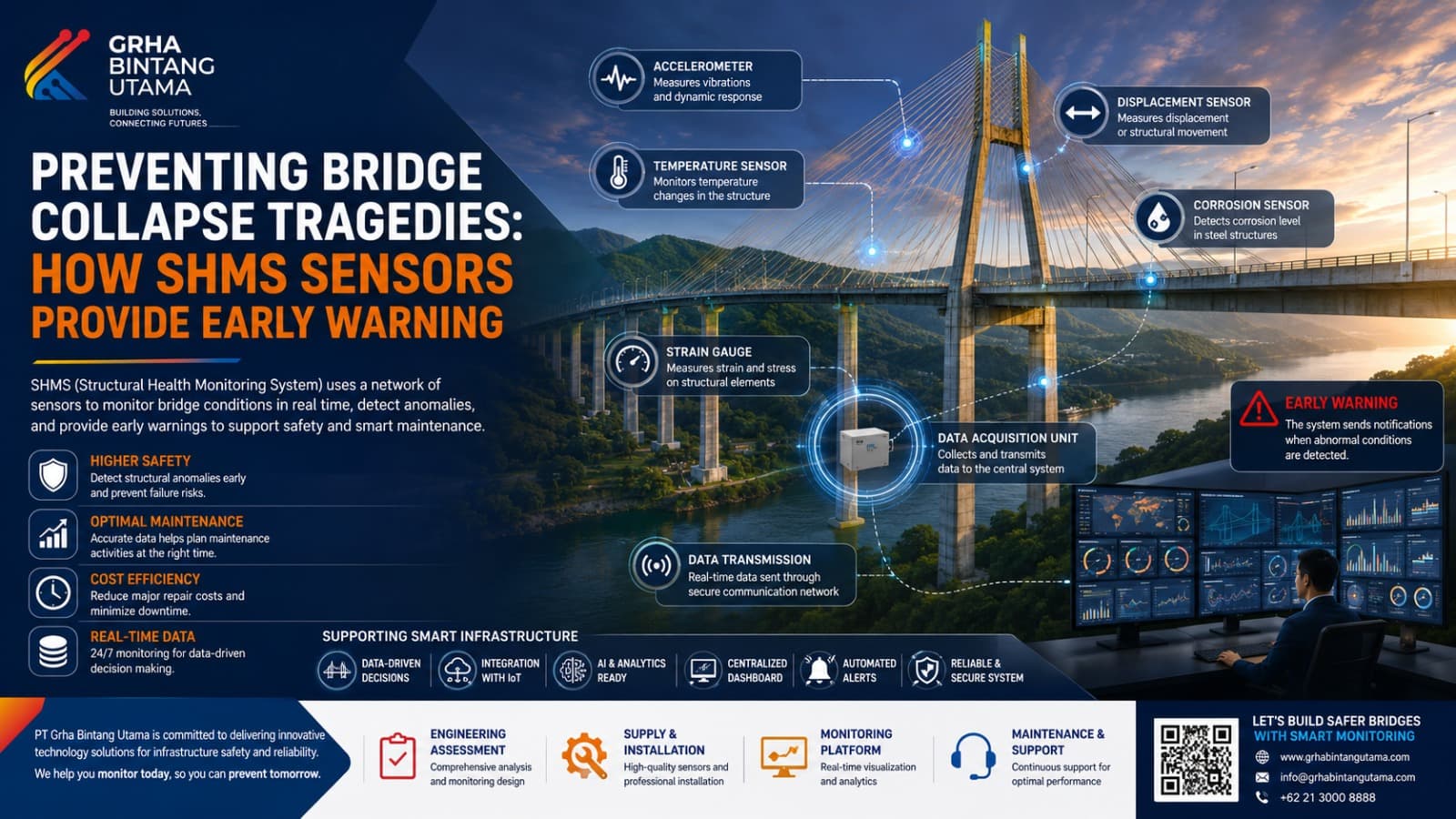
https://grhabintangutama.co.id/Preventing Bridge Collapse Tragedies: How SHMS Sensors Provide Early Warning
Read More
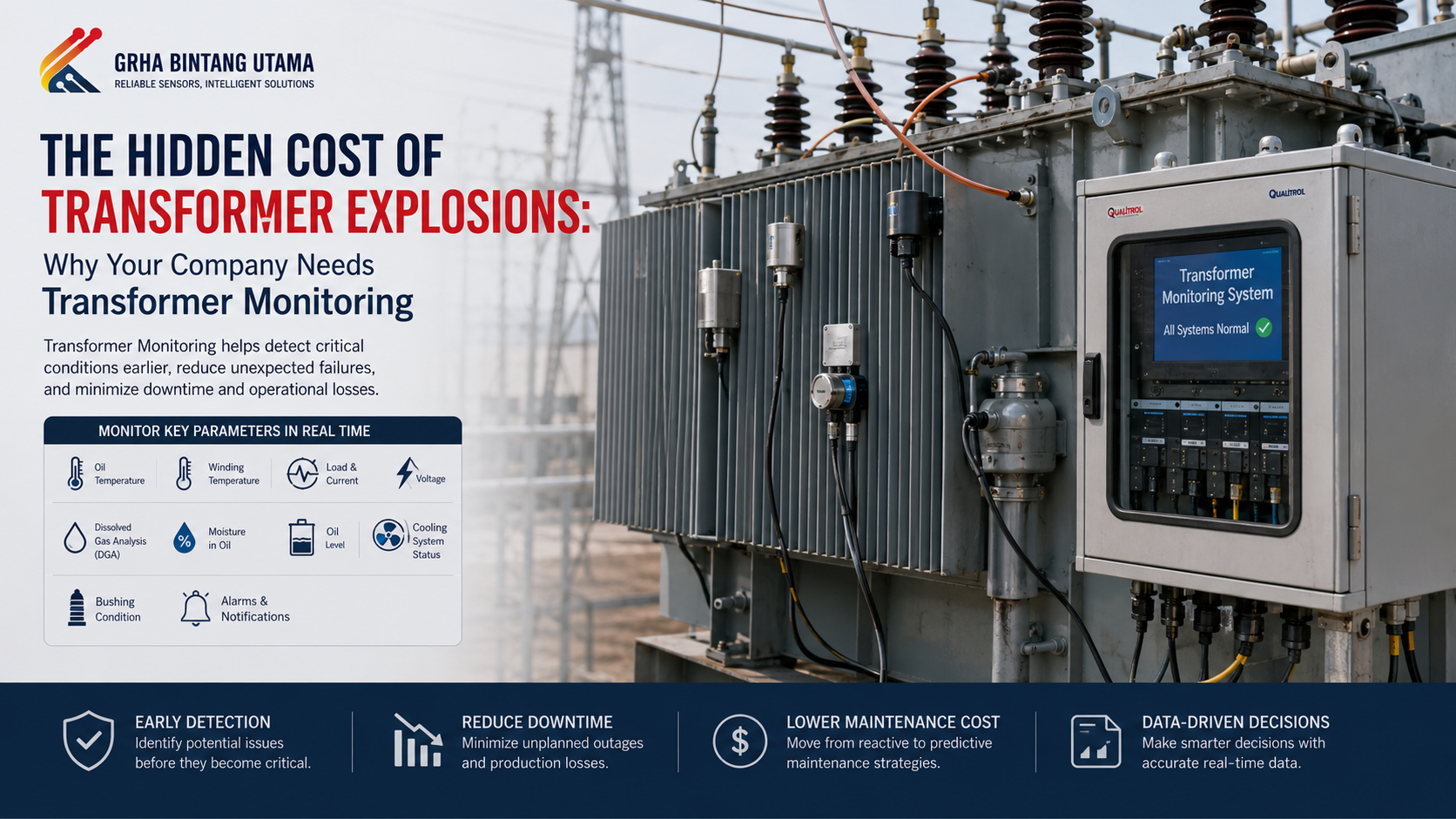
Transformer Monitoring: Prevent Hidden Costs from Transformer Failure and Unplanned Downtime
Read More
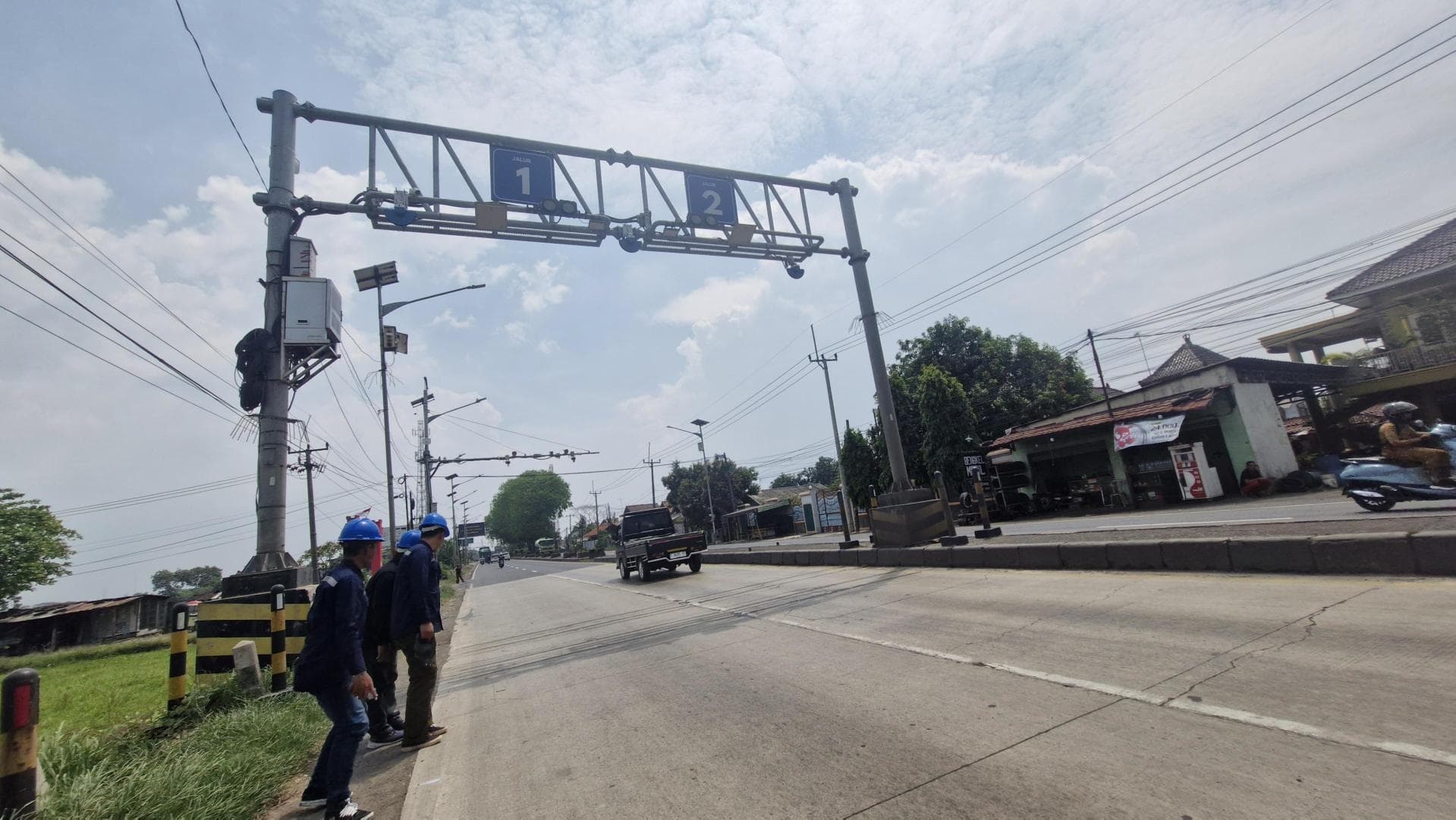
WIM System in Indonesia for Weighing Trucks Without Stopping
Read More

Jakarta Selatan, [email protected] 0812-1146-0008