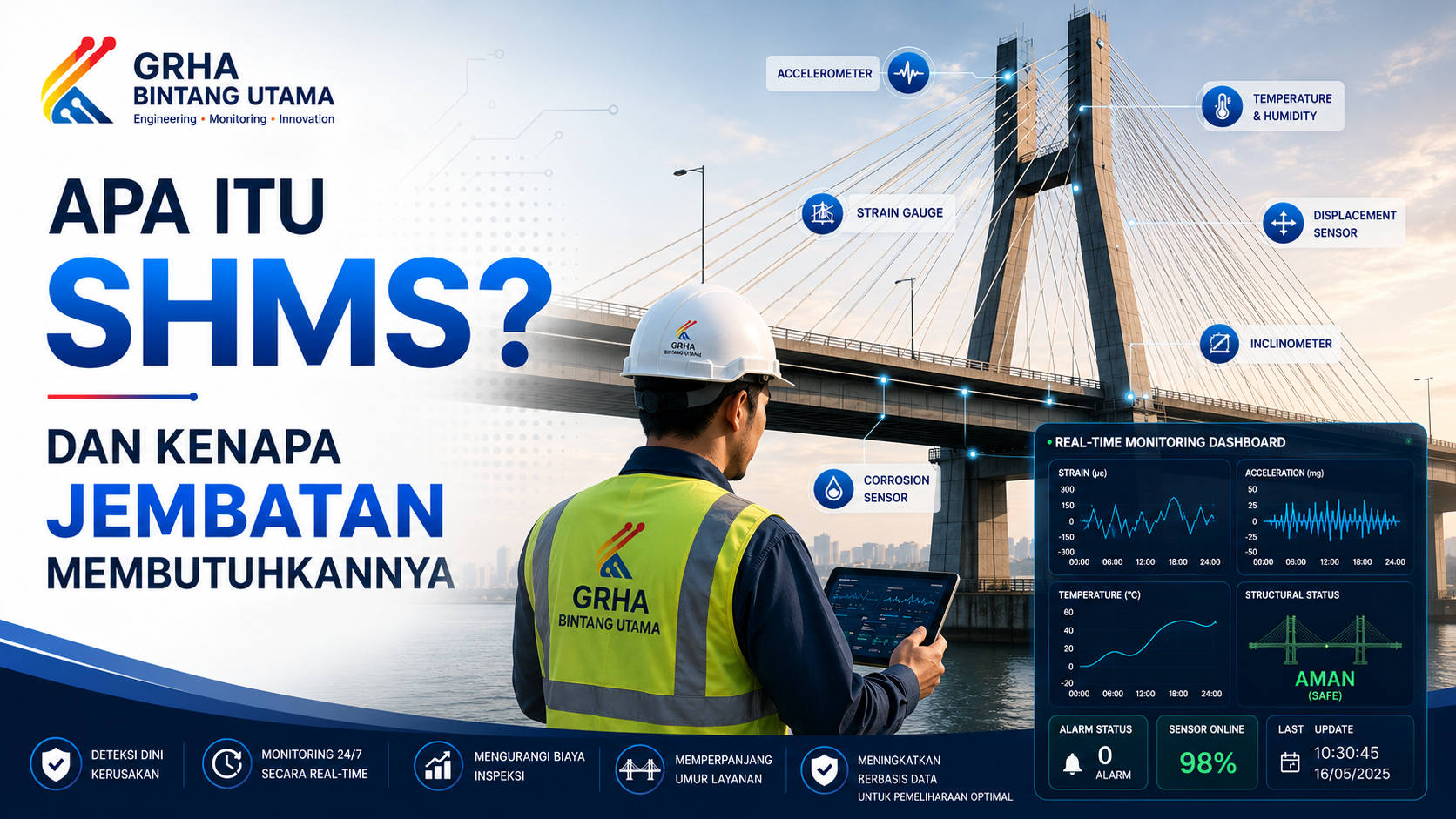
What is SHMS (Structural Health Monitoring System) and Why Do Bridges Need It?
Author
What is SHMS (Structural Health Monitoring System) and Why Do Bridges Need It?
Bridges are among the most critical infrastructure assets supporting transportation, logistics, and economic development. Every day, they are subjected to continuous traffic loads, environmental changes, wind, temperature fluctuations, and in some regions, seismic activity. As bridges age, their structural performance naturally changes, making continuous monitoring increasingly important to ensure public safety and infrastructure reliability.
Traditional bridge inspections remain essential, but they are generally conducted at scheduled intervals and rely heavily on visual observations. Many structural changes, such as micro-cracks, excessive vibration, hidden corrosion, or abnormal deformation, may develop between inspection periods and remain undetected until they become significant problems.
This is where the Structural Health Monitoring System (SHMS) plays a vital role.
SHMS is an advanced technology that continuously monitors the condition of bridge structures in real time. By combining intelligent sensors, data acquisition systems, communication networks, and analytical software, SHMS provides engineers with valuable information about a bridge's structural behavior throughout its service life.
Instead of relying solely on periodic inspections, SHMS delivers continuous data that helps engineers identify structural changes at an early stage. This proactive approach allows maintenance teams to respond before minor issues develop into costly repairs or safety risks.
What is SHMS?
A Structural Health Monitoring System (SHMS) is an integrated monitoring solution designed to evaluate the condition and performance of civil infrastructure continuously.
The system collects information from multiple sensors installed at strategic locations on a bridge. These sensors measure structural responses such as strain, vibration, displacement, inclination, temperature, corrosion, and other environmental parameters.
The collected information is transmitted to a Data Acquisition System (DAQ), processed, and sent to a central server or cloud platform where engineers can monitor the bridge through an intuitive dashboard.
With continuous monitoring, SHMS enables infrastructure owners to understand how a bridge behaves under real operating conditions rather than relying only on periodic manual inspections.
Why Do Bridges Need SHMS?
Modern bridges are exposed to numerous external factors that influence their structural integrity throughout their lifetime.
Heavy truck traffic, increasing vehicle loads, wind forces, earthquakes, temperature expansion, material fatigue, corrosion, and natural aging all contribute to gradual structural changes.
Without continuous monitoring, these changes may remain unnoticed until they become visible or begin affecting structural performance.
SHMS addresses this challenge by providing real-time information about the bridge's condition, allowing engineers to detect anomalies before they become critical.
Early detection significantly improves maintenance planning, reduces repair costs, minimizes service interruptions, and most importantly, enhances public safety.
How Does SHMS Work?
A typical SHMS consists of several integrated components working together to collect, transmit, analyze, and visualize structural data.
Sensors installed throughout the bridge continuously measure structural behavior. These sensors are connected to a Data Acquisition System (DAQ), which records and processes incoming information.
The processed data is transmitted through wired or wireless communication networks to a cloud platform or monitoring server.
Advanced monitoring software then converts raw data into easy-to-understand dashboards, trend graphs, alarm notifications, and performance reports.
When measured values exceed predefined safety thresholds, the system can automatically generate alerts, enabling engineers to investigate and take corrective action immediately.
Common Sensors Used in SHMS
An effective SHMS utilizes multiple sensor technologies to capture different aspects of structural behavior.
Common sensors include:
- Strain Gauges
- Accelerometers
- Displacement Sensors
- Inclinometers
- Temperature Sensors
- Corrosion Monitoring Sensors
- Wind Speed and Direction Sensors
- Water Level Sensors
- Crack Monitoring Sensors
- Load Cells
Each sensor contributes valuable information that helps engineers develop a comprehensive understanding of the bridge's structural condition.
Benefits of SHMS
Implementing SHMS provides numerous operational and economic benefits.
Continuous structural monitoring enables early damage detection before problems become severe.
Real-time information supports predictive maintenance strategies, allowing maintenance activities to be scheduled based on actual structural conditions rather than fixed inspection intervals.
SHMS also helps reduce inspection costs, optimize maintenance budgets, improve asset management, and extend the service life of bridge infrastructure.
For bridge owners and government agencies, the availability of continuous structural data improves decision-making while increasing confidence in infrastructure safety and reliability.
SHMS and Smart Infrastructure
As digital transformation continues across the infrastructure sector, SHMS has become a key component of Smart Infrastructure initiatives.
Modern SHMS platforms can be integrated with Internet of Things (IoT) devices, cloud computing, Artificial Intelligence (AI), Digital Twin technology, and predictive analytics.
These technologies allow engineers not only to monitor current structural conditions but also to forecast future performance trends and identify potential risks before failures occur.
The result is a more efficient, data-driven maintenance strategy that reduces operational costs while maximizing infrastructure availability.
PT Grha Bintang Utama Supports Modern Infrastructure Monitoring
PT Grha Bintang Utama is committed to supporting the advancement of intelligent infrastructure through innovative monitoring technologies.
By integrating advanced sensing technology, reliable data acquisition systems, and modern analytical platforms, SHMS provides infrastructure owners with accurate, real-time structural information.
Continuous monitoring enables informed maintenance decisions, improves public safety, extends bridge service life, and supports sustainable infrastructure management for the future.
Source :
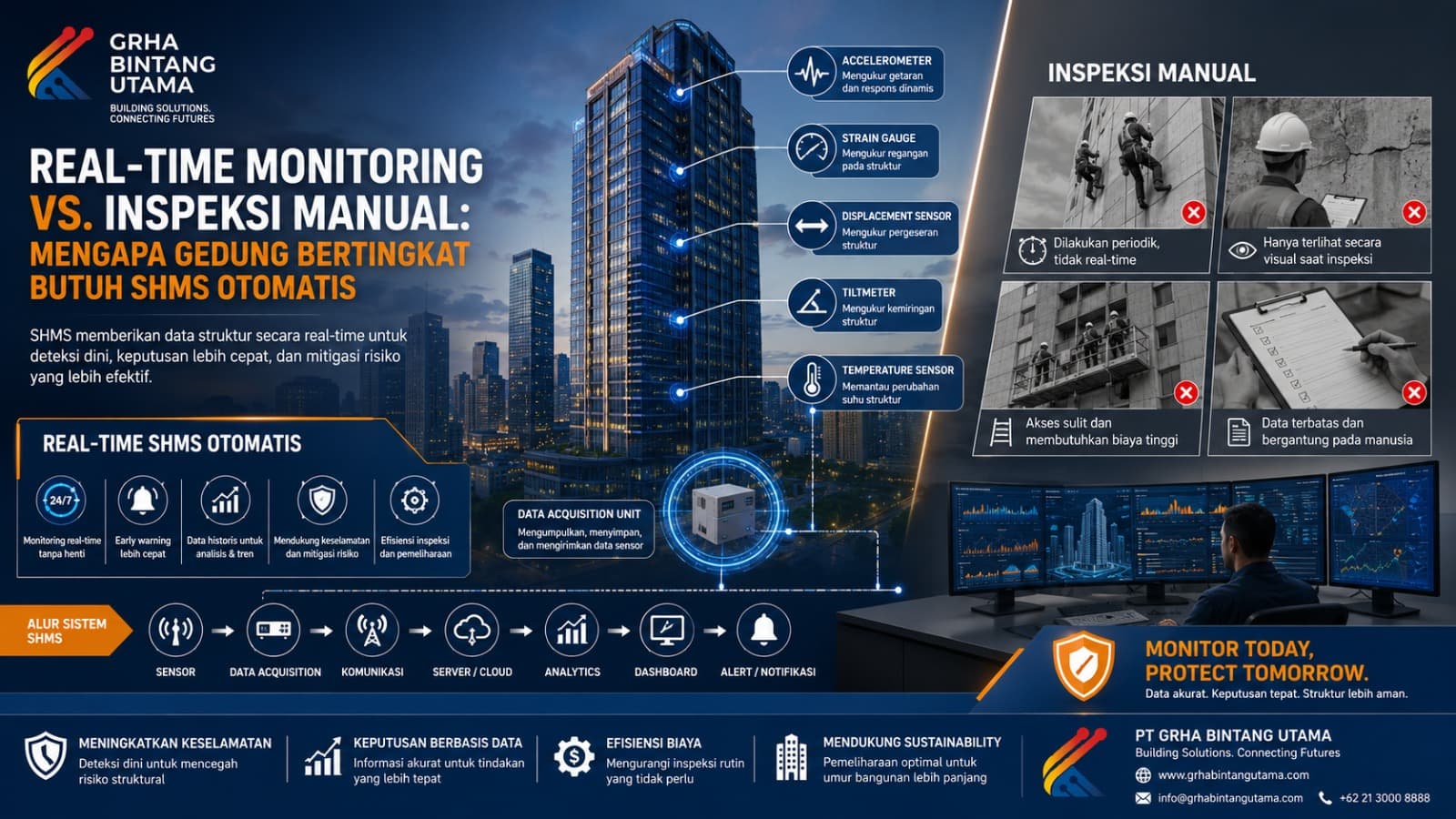
https://grhabintangutama.co.id/Real-Time Monitoring vs Manual Inspection: Why High-Rise Buildings Need Automated SHMS
Read More
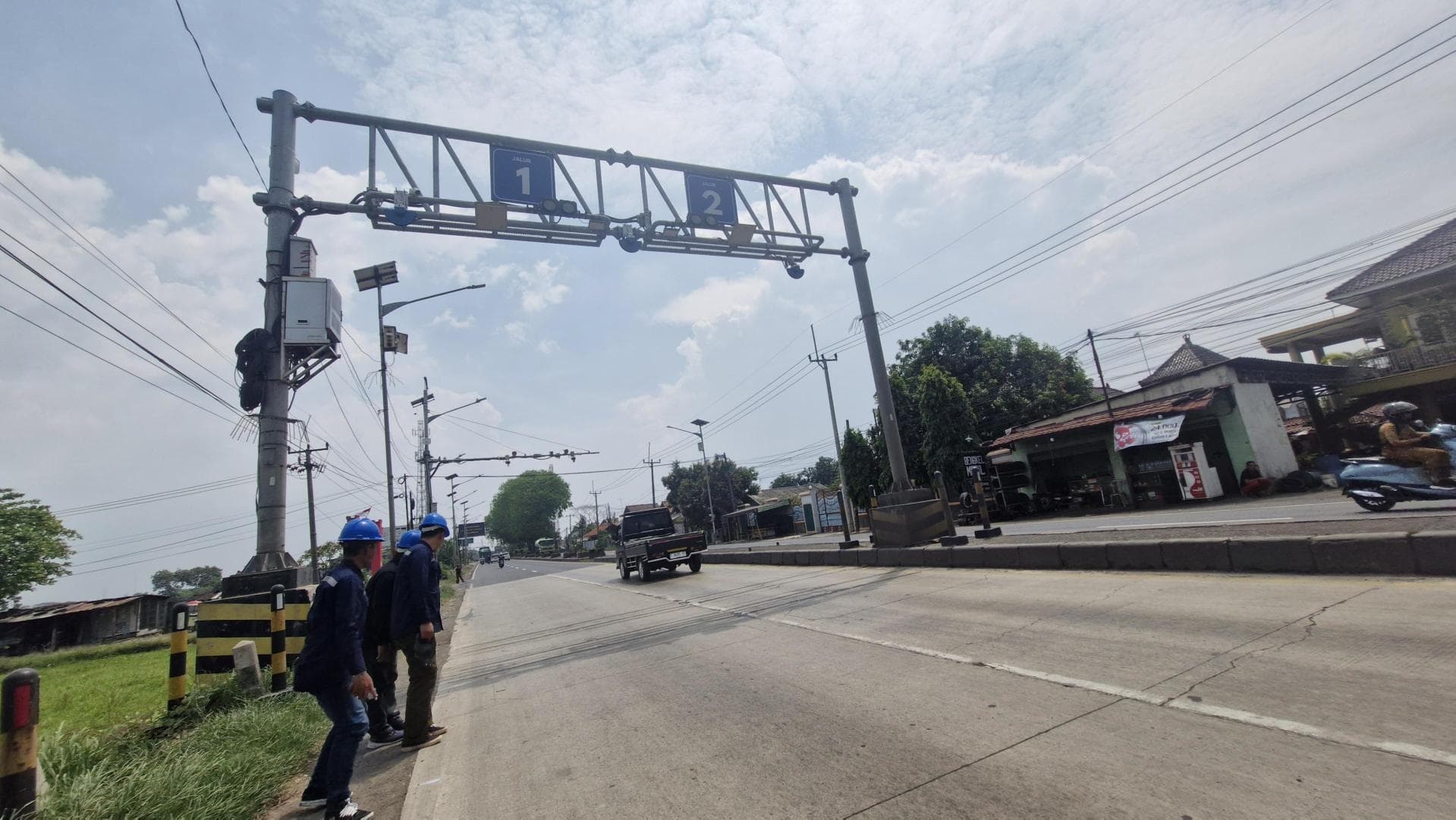
WIM System in Indonesia for Weighing Trucks Without Stopping
Read More
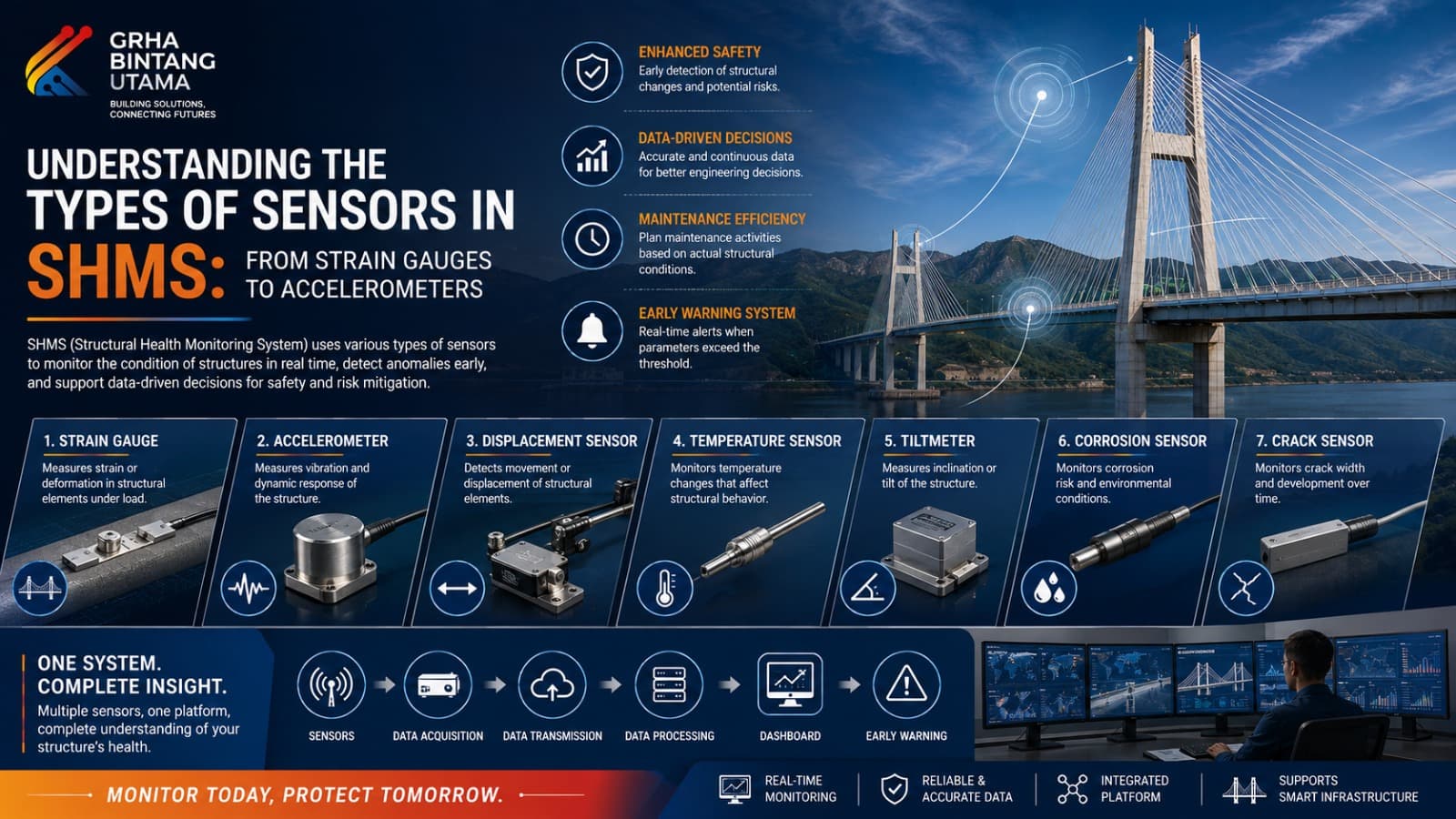
Types of Sensors in Structural Health Monitoring Systems
Read More

Jakarta Selatan, [email protected] 0812-1146-0008